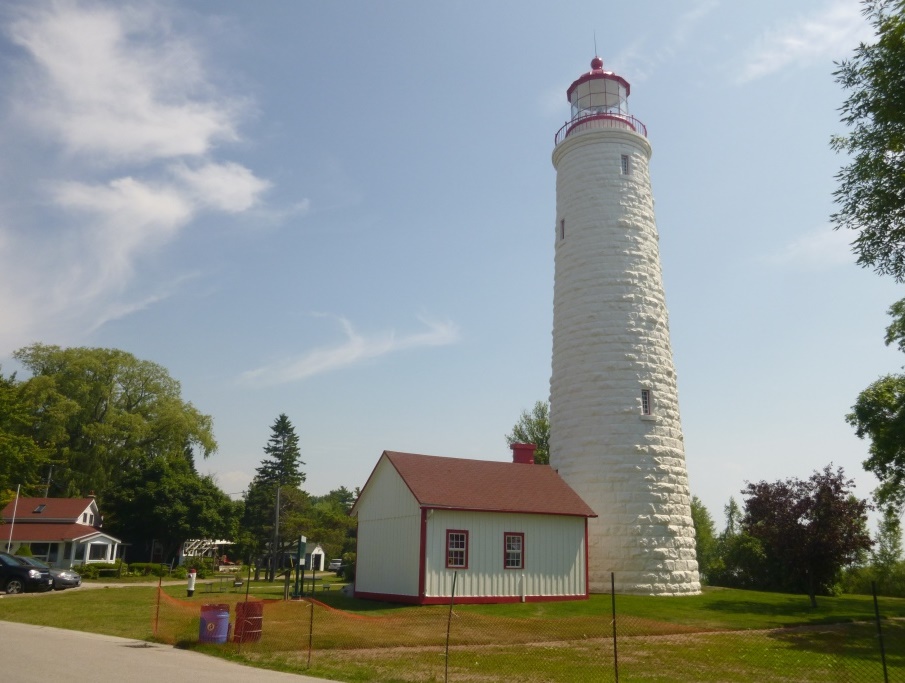
Historic stone and brick stabilized from the inside — without changing the face of the building.
Specialty Grouting Services provides heritage masonry grouting across Ontario for churches, barns, lighthouses, and other historic buildings. Over decades, the mortar and rubble core inside a thick masonry wall washes out and loses its bond, leaving voids, bulging wythes, and water paths behind a face that still looks sound. We fill and consolidate that core by injection, so the wall works as one unit again.
What is heritage masonry consolidation grouting?
Injection ports are drilled into existing mortar joints — not the stone or brick — and a flowable, compatible grout is pumped at low pressure to fill the voids in the core of the wall and re-bond the inner and outer wythes. Work proceeds from the bottom up in lifts so the grout fills completely without overloading the wall, and every port is checked for communication with the next. When the work is finished the ports are pointed to match, and the elevation looks as it did before we arrived.
What makes heritage work different from modern concrete grouting?
Compatibility and control. Historic lime-based masonry is softer and more permeable than modern concrete, so the grout has to be selected to match its strength and breathability, and the injection pressure has to stay low enough that it never displaces the face. We also work to the conservation requirements set for the building: documenting conditions before and after, protecting finishes, and limiting the work to what the structure actually needs.
What heritage structures do you work on?
- Stone and brick churches, bell towers, and institutional buildings
- Lighthouses and other masonry towers
- Stone foundations and barn walls
- Retaining walls, bridge abutments, and culvert headwalls built of stone
- Historic foundations with active water infiltration (paired with groundwater control grouting)
Frequently Asked Questions
Not when it is done at the right pressure with the right material. Ports go into the mortar joints, injection pressures stay low, and the work is staged in lifts and monitored so the face is never displaced. Ports are pointed to match on completion.
Yes. Where the core is open and carrying water we consolidate it with grout; where there is a defined active leak path we can also inject water-activated polyurethane to shut it down.
Yes. We work to the conservation specification for the building and provide the documentation needed for the heritage approval and close-out process.
By tracking grout volumes port by port and watching for communication between ports — grout appearing at an adjacent port confirms the void between them has filled.
Send photos, any condition assessment, and the drawings or specification you have to bill@sgservices.ca, or call 226-820-4233. A site visit is usually part of pricing heritage work.
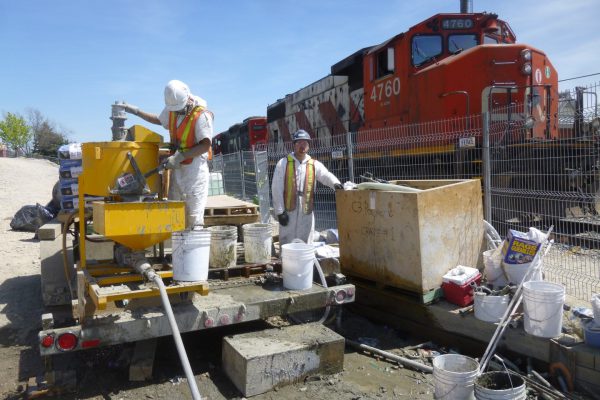 Rail & TransitBox Beam Bridge Girder Grouting — Kipling Avenue, EtobicokeFourteen box-beam girder joints filled with 14,600 litres of 55 MPa non-shrink grout in two days over a live road on the Metrolinx Georgetown corridor.Read the case study
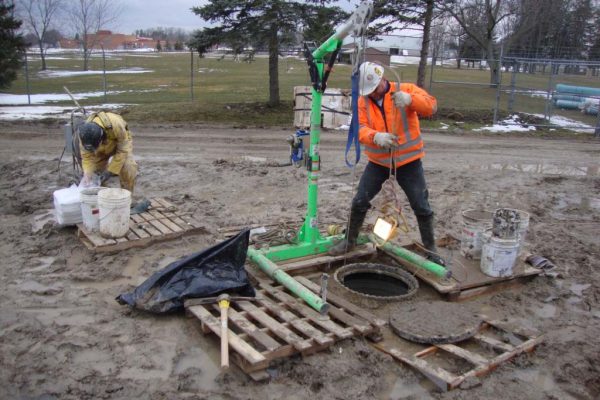 MunicipalManhole Leak Repairs — Tavistock Community CentreInfiltration through pipe penetrations in a precast manhole stopped with water-activated resin, keeping fines out of the sewer and the structure in service.Read the case study
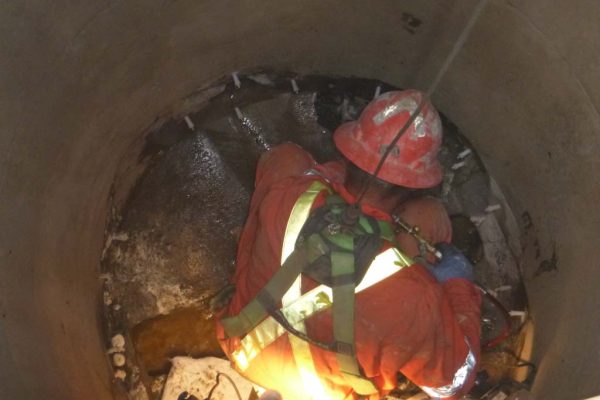 MunicipalSanitary Manhole Leak Repairs — City of WaterlooActive groundwater inflows through joints and pipe penetrations in three sanitary manholes sealed by polyurethane injection — without taking the sewer out of service.Read the case study
Stabilizing a Historic Building?
Tell us about the structure and we’ll propose a grouting approach that respects it.