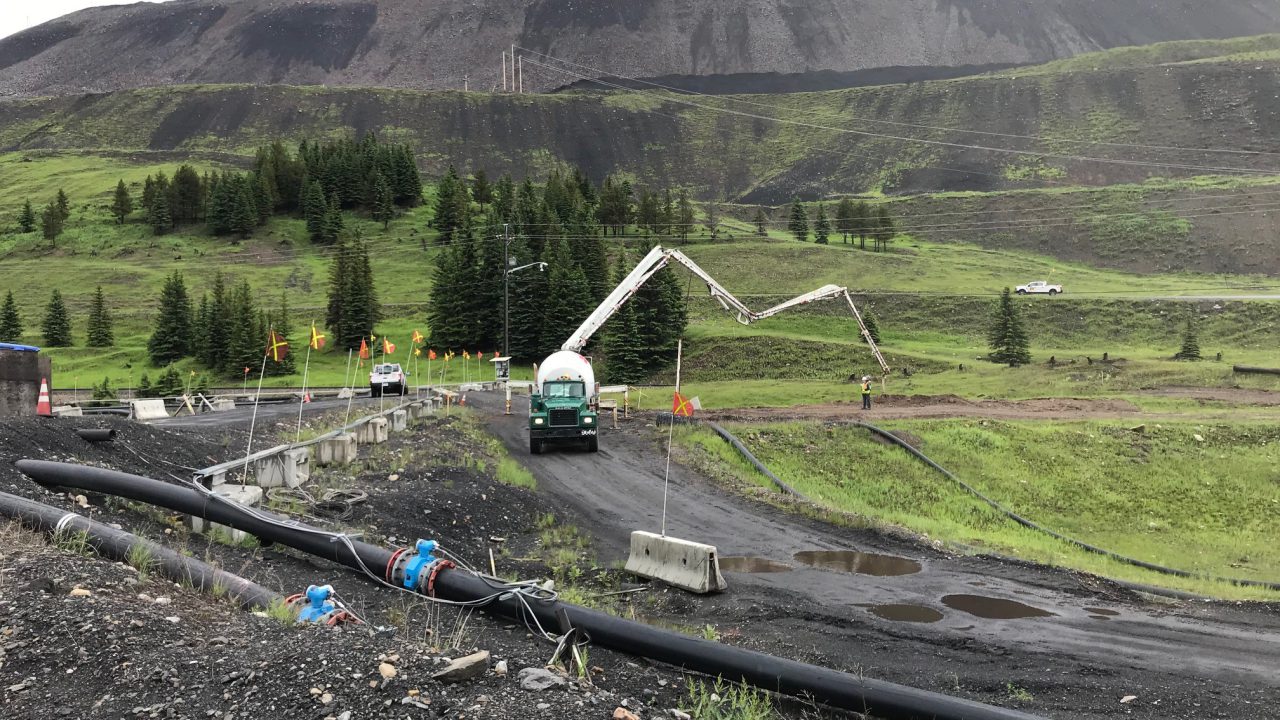
Redundant lines filled. Risk removed. Records closed.
Specialty Grouting Services provides pipe abandonment grouting across Ontario, filling decommissioned watermains, sewers, culverts, and pipelines with highly flowable grout so they can never collapse or carry water again. Where a line is being rehabilitated rather than retired — a new pipe inside the old — see annular space grouting.
Why can’t an old pipe just be left empty in the ground?
Because empty pipes fail twice. First the pipe deteriorates and collapses, taking the road or ground above down with it; and until then it acts as an open drain, carrying groundwater along its length and washing out soil wherever it leaks. Filling the pipe with grout removes both risks permanently — which is why most municipalities require it.
How is a pipe abandoned by grouting?
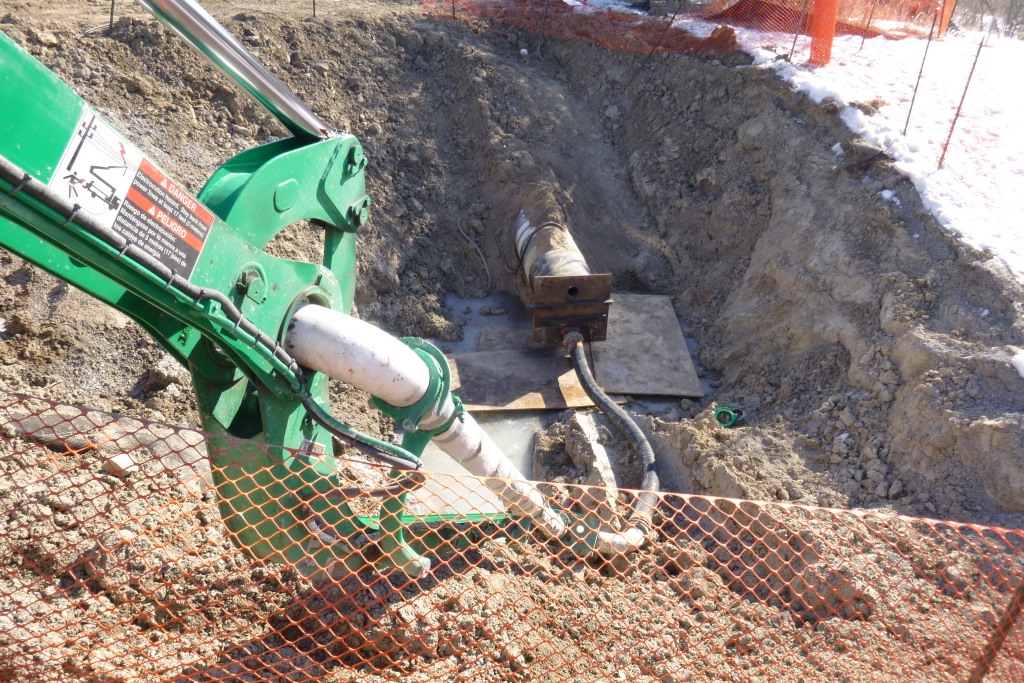
Access points are established, bulkheads are placed to contain the grout, and a highly flowable mix — low-density cellular concrete (LDCC) or a flowable cementitious grout — is pumped until the line is full. We track placed volume against the theoretical pipe volume and provide the records, so the closure is documented, not assumed.
How far can you fill from a single access point?
Long distances. Flowable abandonment mixes are designed to travel, which matters when a line runs under roads, watercourses, or private property where digging access pits is expensive or impossible. Tell us the alignment and we will plan access points around your constraints, including crossings under roads and rail.
Frequently Asked Questions
Cost is driven by pipe diameter and length (the fill volume), access point construction, the mix required, and mobilization. Send the pipe size, length, and location and we can price it quickly.
Usually LDCC or a flowable cementitious grout — light, highly fluid mixes that fill long runs completely. The choice depends on pipe size, groundwater conditions, and any strength requirement your municipality or engineer specifies.
Yes. You receive placed volumes against theoretical volume, access locations, and material data — the paperwork a municipality needs to formally close the asset.
Small-diameter, short runs can be done in a day; long trunk lines take longer and are usually scheduled around lane closures or site access. The quote includes the expected duration.
Yes. Abandonment mixes are placed at controlled pressures, and we plan around adjacent live services — locates, monitoring, and staging are part of the job plan.
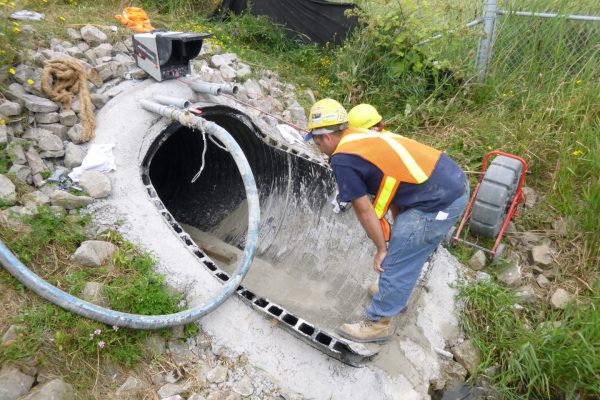 Highways & TunnelsGrout Pipe & Bulkhead Installations — Highway 407 Culvert ReliningStaged, low-pressure annular grouting of sliplined culverts under Highway 407 — grout pipes and bulkheads installed by our crew for a complete, liner-safe fill.Read the case study
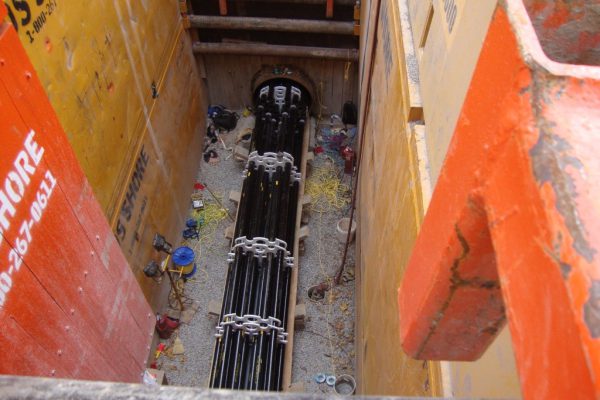 Rail & TransitRail Crossing Casing Annular Grouting — Douro Street, TorontoA 50 m, 1,200 mm casing carrying thirty FRE ducts under the rail corridor filled with 46 m³ of lightweight grout at 20 psi — every duct proven clear on completion.Read the case study
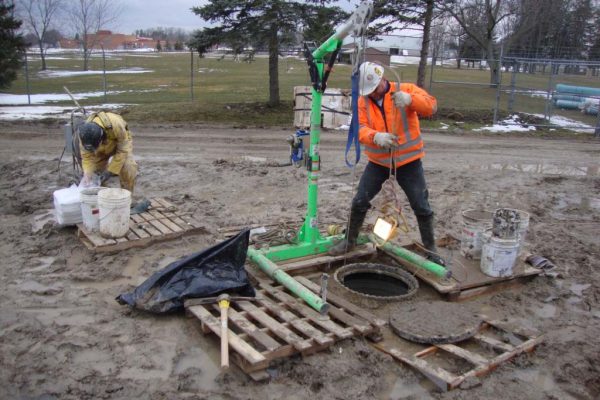 MunicipalManhole Leak Repairs — Tavistock Community CentreInfiltration through pipe penetrations in a precast manhole stopped with water-activated resin, keeping fines out of the sewer and the structure in service.Read the case study
Close the Line Properly
Send the pipe details and alignment — we’ll come back with an abandonment plan and price.