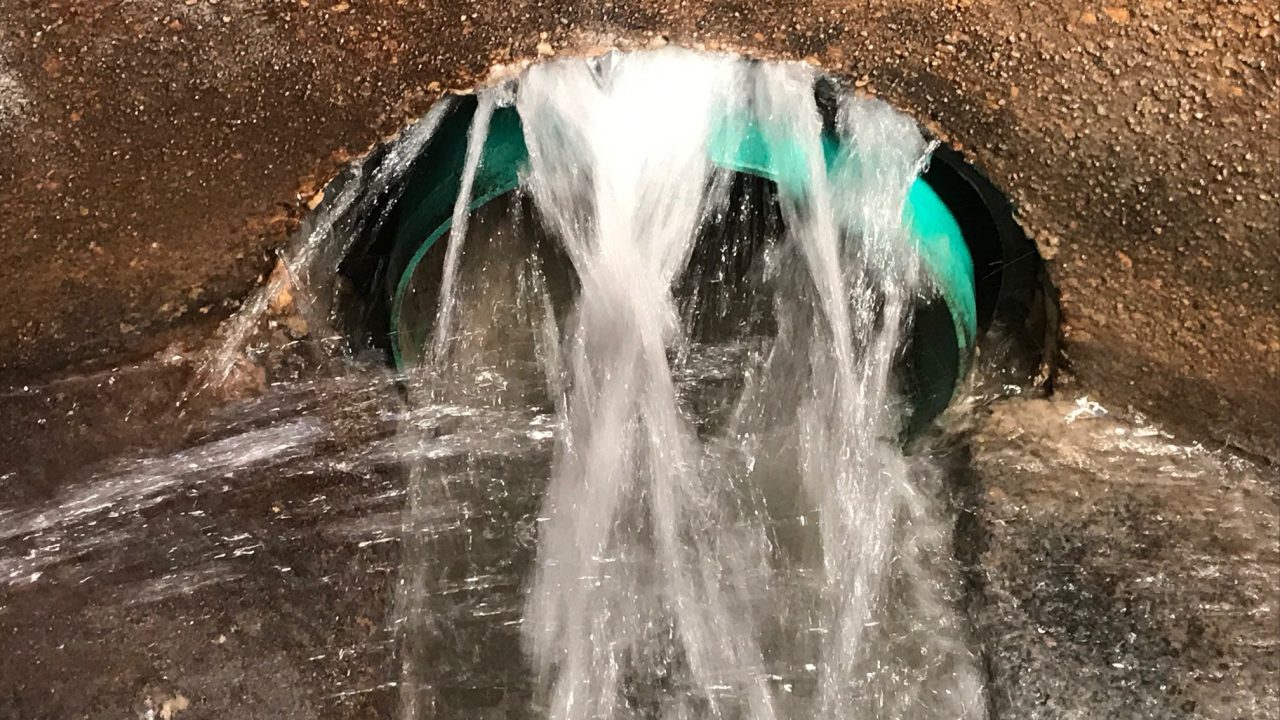
Active leaks stopped. Inflows cut off. Structures back in service.
Specialty Grouting Services provides groundwater control grouting across Ontario, stopping active water infiltration in concrete structures — water treatment tanks, reservoirs, manholes, chambers, vaults, pipes, and parking garages. Where water is carrying soil in with it, we pair leak sealing with void filling and structural support to deal with the damage the water already caused.
How do you stop active water infiltration in a concrete structure?
By injection grouting: we drill to the leak path and inject water-activated polyurethane resin, which reacts with the water itself, expands, and seals the crack, joint, or pipe penetration. For larger fractures, open joints, or high-volume flows, we use cementitious injection grouting to fill the pathway and shut the water down. Packers are removed and drill holes are parged with hydraulic cement for a clean finish.
What structures can be sealed by injection grouting?
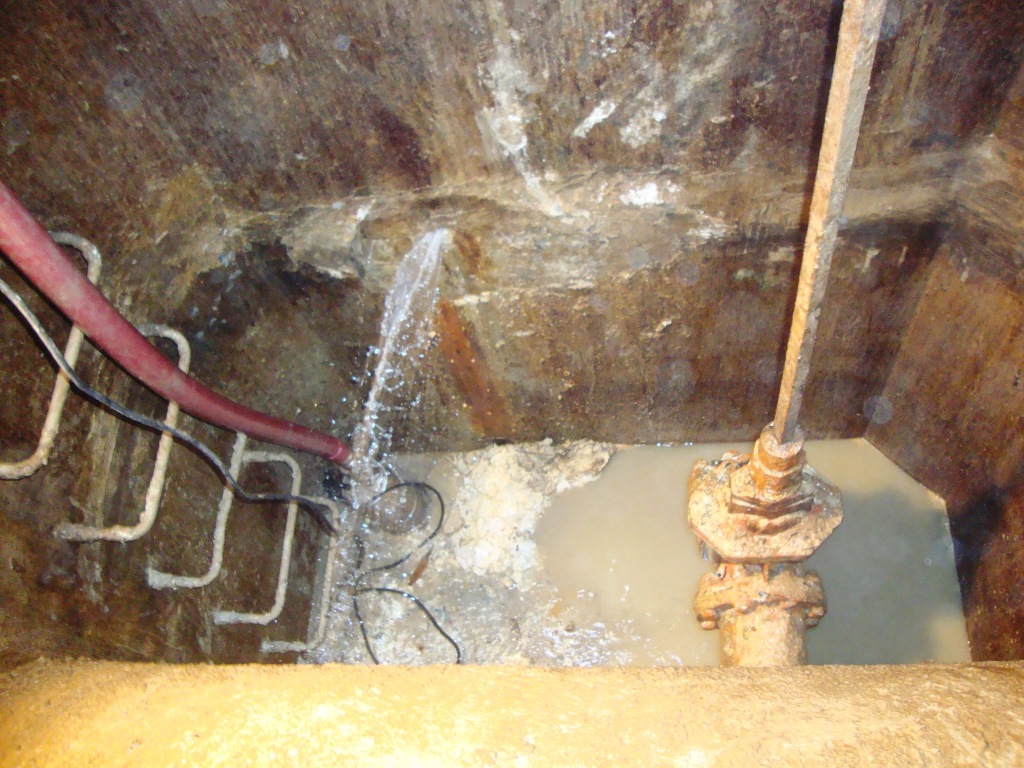
Any concrete structure with a defined leak path: precast and cast-in-place manholes, wet wells, valve chambers and vaults, water and wastewater treatment tanks, reservoirs, tunnels, pipes, and parking garages. On sanitary structures, sealing infiltration also cuts inflow and infiltration (I&I) — water your plant no longer has to treat. See a real example in our City of Waterloo manhole repair case study.
Why act on leaks early?
Because moving water never stays a water problem. Infiltration carries fines out of the surrounding soil, creating voids behind the structure that lead to settlement, misalignment, and structural damage far more expensive than the original leak. Early injection sealing protects the structure and the ground around it.
Frequently Asked Questions
It depends on the number of active leak points, inflow volume, access, confined space entry requirements, and travel distance. Most repairs are quoted after reviewing photos or a site visit — call 226-820-4233 or send photos to bill@sgservices.ca for a price.
A chemical resin injected into a wet crack or joint that reacts with the water present, expands, and cures into a flexible seal. Because it needs water to work, it is ideally suited to sealing active leaks that cement-based products can’t stop.
Many single-structure repairs are completed in one mobilization. Larger tanks, multiple structures, or high inflows take longer — we confirm the schedule in the quote so you can plan around it.
Yes. Our crews are confined space entry experts and routinely work in live manholes and chambers, including troubleshooting sewer flow while the repair is under way. See Confined Space Grouting.
Yes. We work to your specifications and provide material data sheets, methodology, and injection records so the repair can be specified, verified, and closed out.
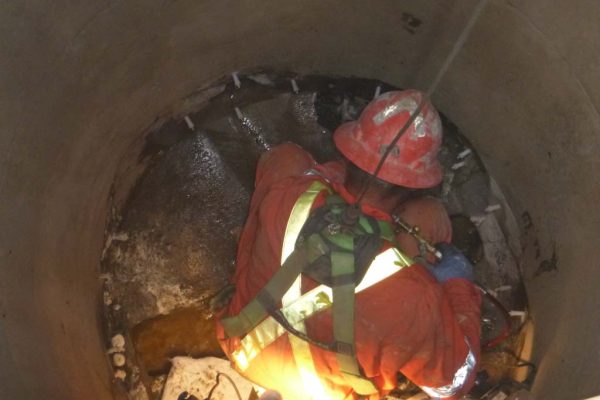 MunicipalSanitary Manhole Leak Repairs — City of WaterlooActive groundwater inflows through joints and pipe penetrations in three sanitary manholes sealed by polyurethane injection — without taking the sewer out of service.Read the case study
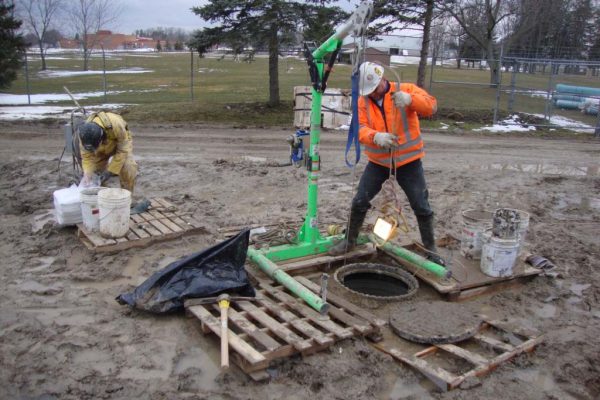 MunicipalManhole Leak Repairs — Tavistock Community CentreInfiltration through pipe penetrations in a precast manhole stopped with water-activated resin, keeping fines out of the sewer and the structure in service.Read the case study
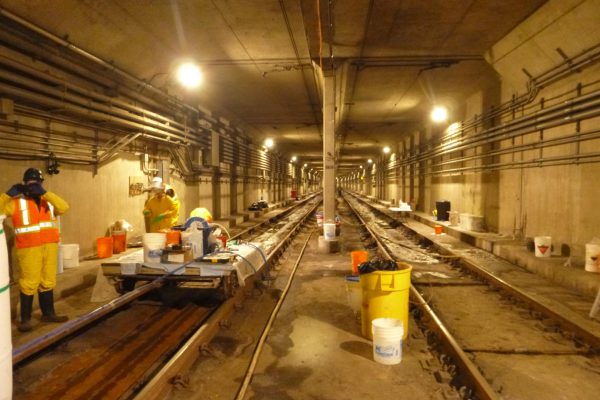 Rail & TransitTransit Tunnel Joint Sealing & Backwall Grouting — CalgaryLeaking joints in a light rail tunnel sealed and voids behind the liner filled at track level during overnight possessions, without disrupting service.Read the case study
Stop the Water Before It Costs More
Send photos of the leak and we’ll tell you what it will take to shut it down.